While there is no massive, universal abandonment of digital tools, there is a distinct and growing movement in many schools to return to physical products for specific learning activities.
This shift is not necessarily “anti-technology.” Instead, it is a data-driven “rebalancing” effort by educators who are recognizing that while digital tools have their place, physical products often offer superior cognitive and developmental benefits for core learning skills.
Here is a breakdown of where and why this shift toward physical products is occurring.
1. The Major Reversion: Physical Books over E-Textbooks
The most prominent example of this trend is the return to printed textbooks and novels.
International Shifts: Entire nations that were early adopters of full digitization are now reversing course.
Sweden: After years of pushing for digital-first classrooms, the Swedish government recently announced a massive investment (€100 million+) to reintroduce physical textbooks into schools. This decision was driven by concerns over declining literacy rates and student focus.
Denmark & Norway: Similar re-evaluations are underway in these countries, with officials citing alarming data regarding children’s mental health and academic performance linked to excessive screen time.
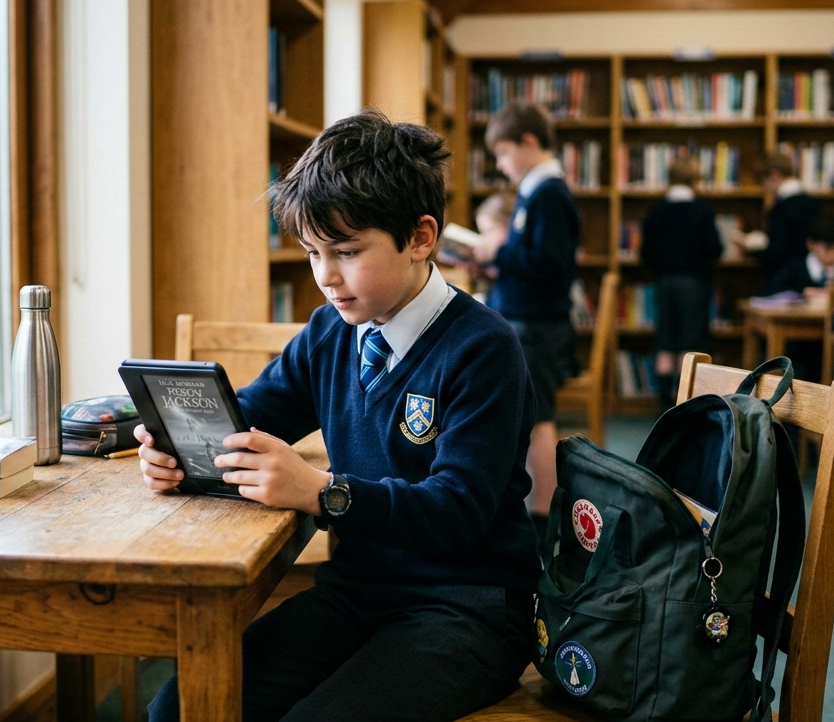

Cognitive Advantages of Print: This reversal is supported by a large body of research known as the “screen inferiority effect.” Study after study has shown that:
Comprehension: Students retain significantly more information and understand complex concepts better when reading from paper compared to a screen.
Mental Mapping: Physical books provide stable spatial cues (page numbers, left/right orientation, the tactile feel of how far they are into a chapter) that help the brain build a “mental map” of the information, aiding recall.
Focus: Physical books are “distraction-resistant.” They don’t have tabs, notifications, hyperlinks, or the temptation to switch to another app, allowing for sustained, deep reading
2. The Resurgence of Handwriting and Paper Notes
Educators are also pushing back against the “laptop-for-every-student” model when it comes to note-taking and writing.
Note-Taking Superiority: Research has consistently shown that students who take notes by hand on paper perform better on recall and synthesis tests than those who type their notes on a laptop.
Why? Typing is too fast; it often allows students to transcribe a lecture verbatim without actually processing the information. Writing by hand forces the student to slow down, listen, summarise, and rephrase concepts, which initiates the learning process immediately.
The Return of Cursive: Several countries and other regions have recently reintroduced mandatory cursive writing instruction. Educators argue that it is not just a legacy skill, but one that vital for fine motor development and brain function.

3. Non-Digital Games and Manipulatives
As noted previously, there is a marked preference among teachers for physical tools over digital ones, especially in early and primary education.
For Mathematics: A 2024 study found that a majority of primary educators preferred non-digital games for math instruction. They valued the ability to use physical manipulatives (dice, blocks, counters) that allow students to touch and move objects to understand abstract mathematical concepts.
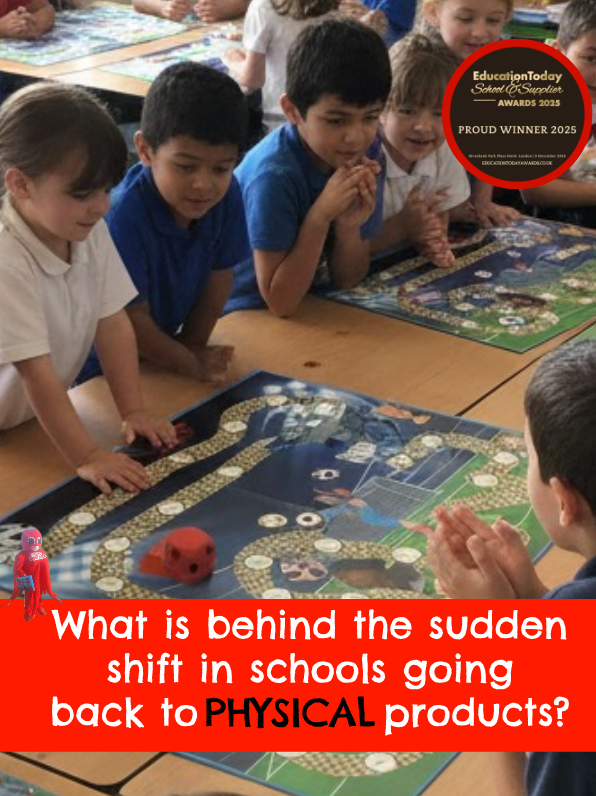
For Social Skills: Physical games and collaborative projects force face-to-face interaction, negotiation, and conflict resolution—skills that are difficult to replicate in digital environments but essential for workforce readiness and social-emotional well-being.
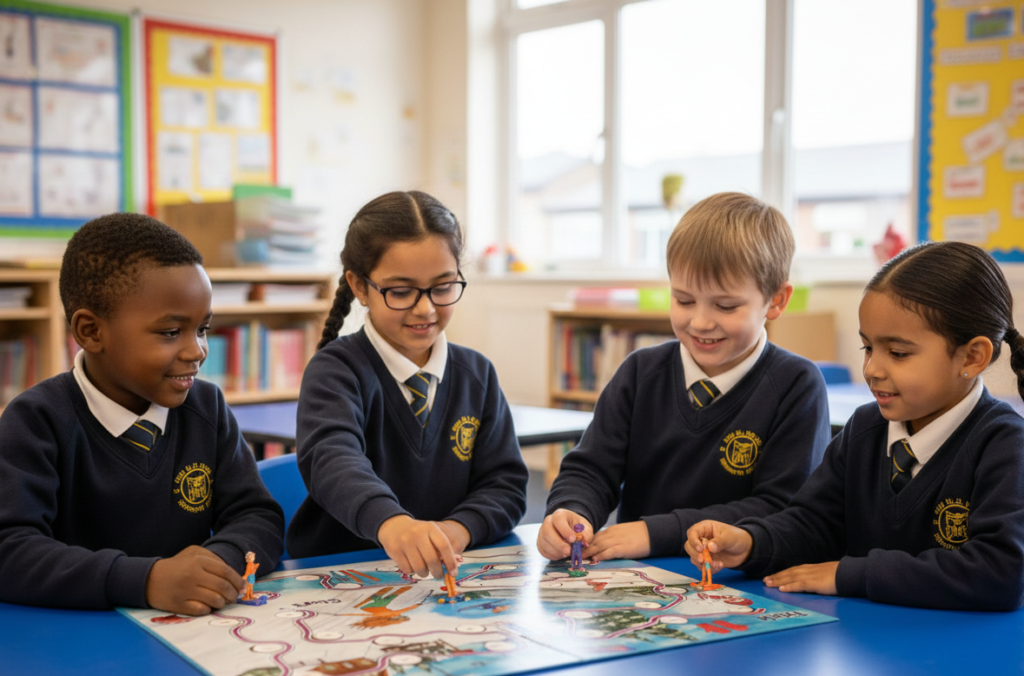

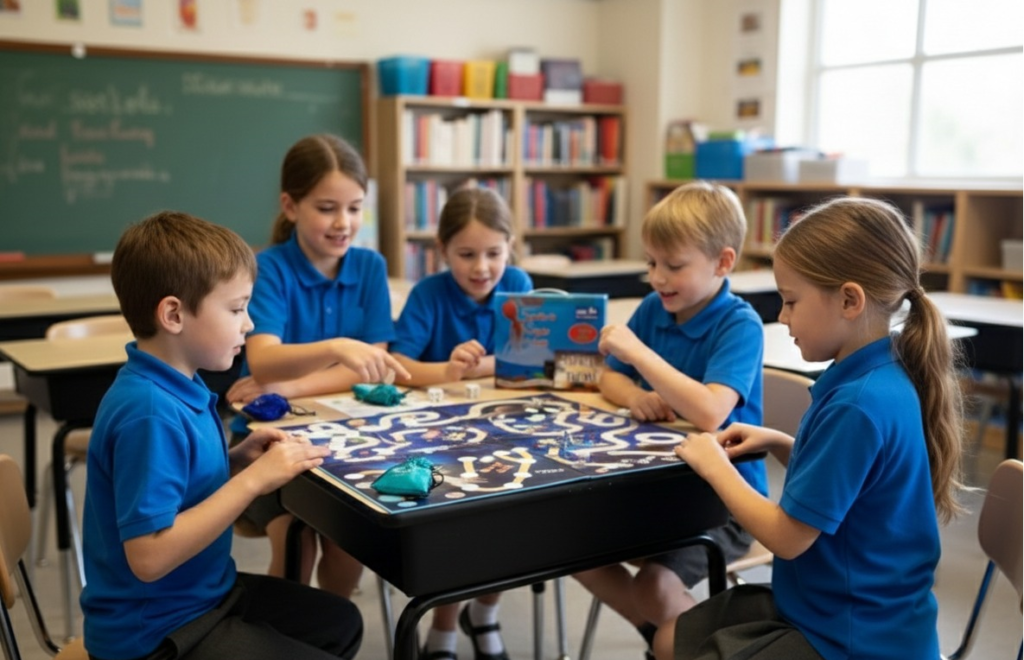
The move back to physical products is driven by practical classroom experience and scientific evidence that highlights the limitations of a digital-only approach:
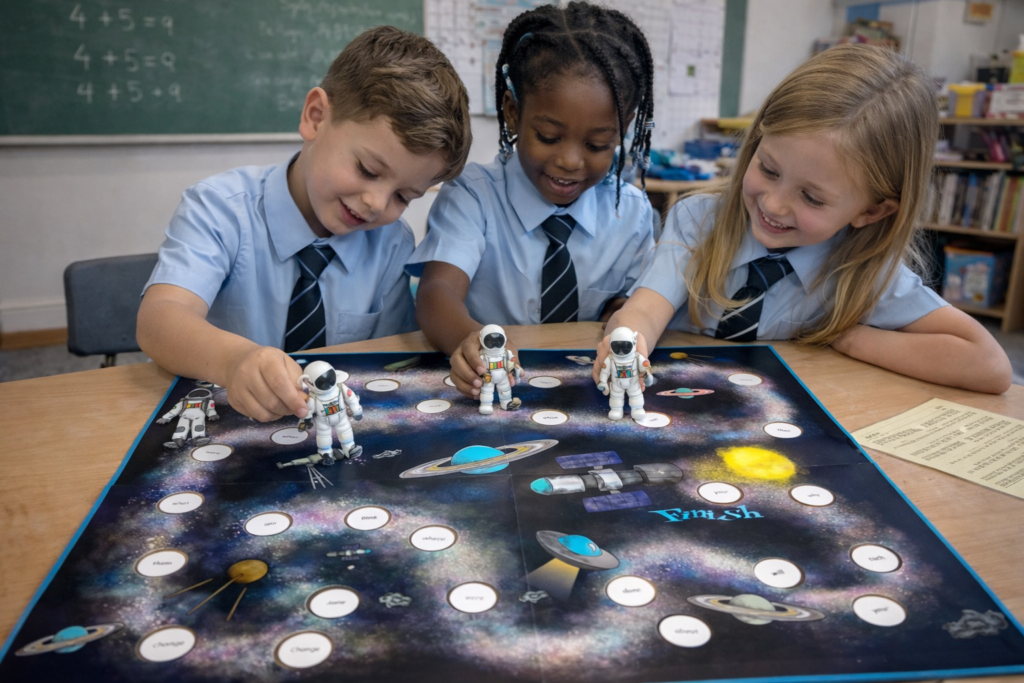
The most significant driver is a growing body of scientific evidence showing that physical mediums are often better suited for deep learning than digital ones.
The “Print Advantage” in Reading Comprehension
Study after study on the “screen inferiority effect” has confirmed that students comprehend and retain more information when reading from paper textbooks compared to screens.
-
Mental Mapping: The tactile experience of a physical book—feeling the weight, seeing the pages, and physically turning them—helps the brain create a spatial “mental map” of the information, which is crucial for recall and understanding complex narratives.
-
Focus: A printed book has zero inherent distractions. There are no tabs, notifications, or hyperlinked temptations, promoting the sustained, linear attention required for deep reading.
-
Overconfidence on Screens: Research suggests students often read digital text faster but more shallowly, leading to overconfidence in their understanding of the material.
The Learning Benefits of Handwriting vs. Typing
Educators are also pushing back against digital note-taking.
-
Processing vs. Transcription: Typing is often too fast; students can become passive transcribers of a lecture. Handwriting is slower and forces the brain to immediately engage in processing, summarizing, and rephrasing concepts, which initiates the learning and memory encoding process.
2. Neurological Development
Neuroscientific research supports the idea that the physical manipulation of objects is essential for optimal brain development, especially in younger learners.
-
Tactile Feedback: When students use a pen to form letters or manipulate physical math materials (like blocks or dice), they receive sensory feedback that strengthens neural pathways associated with learning and spatial reasoning.
-
Fine Motor Skills: The decline in handwriting instruction has been linked to a weakening of fine motor skills in children, which traditional analog activities help develop.
3. Student Well-being and Digital Fatigue
Educators are on the front lines witnessing the negative impacts of excessive screen time on students’ mental and physical health.
-
Combating Digital Fatigue: Both students and teachers are experiencing burnout from being constantly “plugged in.” Symptoms like eye strain, text neck, and mental exhaustion are increasingly common. Traditional learning provides a necessary respite.
-
Protecting Sleep: Educators are reporting that students are arriving at school exhausted, with their sleep cycles disrupted by blue light and late-night device usage. Restricting technology use during the school day helps counteract this.
-
Mental Health Concerns: While the link is complex, many educators are concerned about the correlation between high social media/screen usage and rising rates of anxiety and depression among youth. Reclaiming classroom time for non-digital activities creates a sanctuary from online pressures.
4. Reclaiming Social and Emotional Skills
The shift back to physical products is also a social intervention.
-
Face-to-Face Interaction: Digital games and tools can be isolating. Physical games, collaborative group work, and Socratic seminars force students to navigate the complexities of eye contact, non-verbal cues, and in-person negotiation and conflict resolution—skills that are difficult to replicate in digital environments but vital for adult life.
-
Shared Physical Experience: Doing an experiment, building a model, or playing a board game together creates a shared, immediate physical experience that fosters empathy and connection.
5. Equity and Access (The Digital Divide)
Finally, practical issues of equity play a major role.
-
The Digital Divide: While some students have cutting-edge devices and high-speed internet at home, many do not. Relying too heavily on digital homework or resources can disadvantage students from lower socioeconomic backgrounds. Returning to a reliance on low-tech products like books and notebooks ensures that every student has equal access to core learning tools.
What are our thoughts?
It is important to understand that this is not a full rejection of technology. Few educators want to completely eliminate digital tools, which remain invaluable for research, simulations, accessibility, and preparing students for the modern workforce.
Instead, the shift toward physical products represents a thoughtful rebalancing toward a hybrid model. Educators are increasingly defining clear boundaries: using digital tools intentionally where they offer a distinct advantage, while fiercely reclaiming analog methods—reading print, writing by hand, and physical play—for the deep cognitive and social work that makes education most effective.
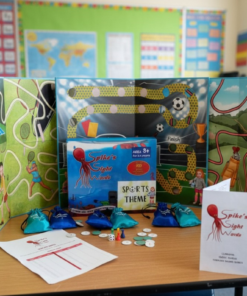
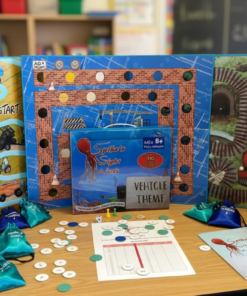
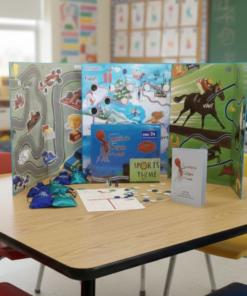
Obviously, we think physical is better so why not check out our award-winning educational board games