Weaving Automaticity Into Literacy: How Spike’s Sight Words Fits Into Scarborough’s Reading Rope
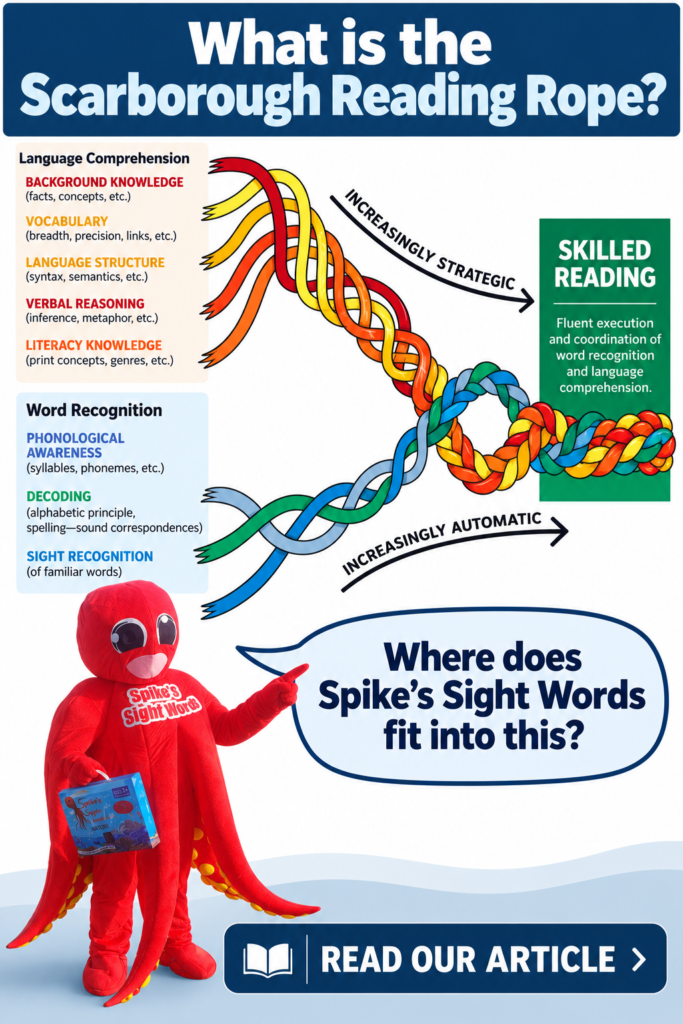
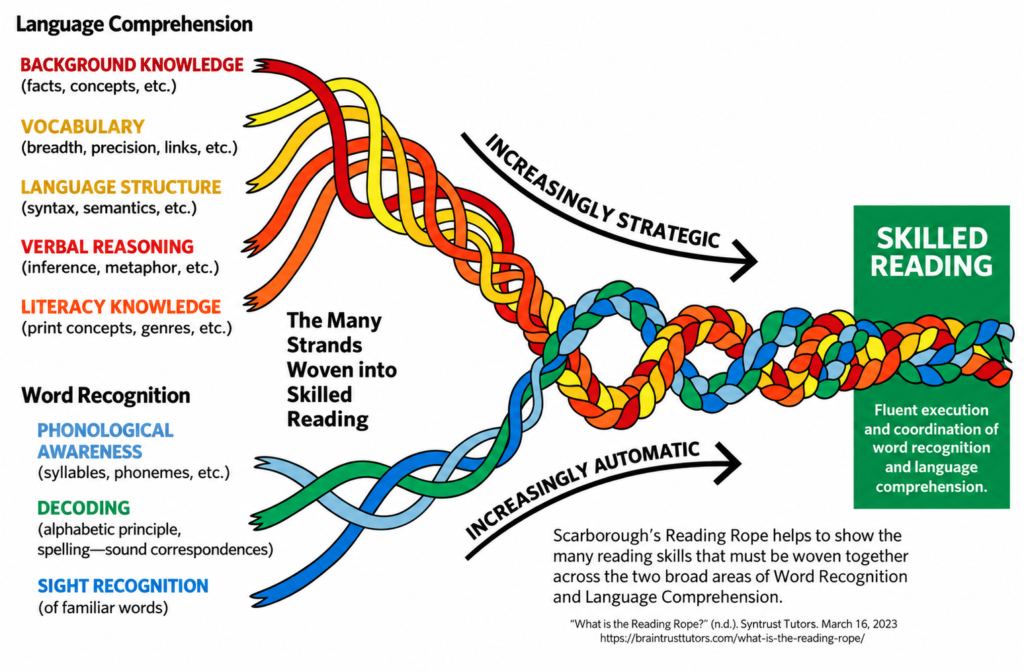
Dr. Hollis Scarborough’s Reading Rope is one of the most enduring and widely accepted metaphors in modern literacy instruction. Designed to illustrate the complex, multifaceted nature of reading development, the rope demonstrates that skilled reading is not a single, isolated skill. Instead, it is a braid woven together from two distinct, interdependent strands: Language Comprehension and Word Recognition.
To achieve fluent reading, strands within both categories must become increasingly automatic and strategic. While much of the early literacy conversation focuses on phonics and decoding, mastery of sight words plays an essential role in tightening the lower strands of the rope. Educational board games like Spike’s Sight Words offer a practical, engaging way to bridge this gap, actively reinforcing the specific competencies that make skilled reading possible.
Understanding Scarborough’s Reading Rope
The rope is divided into two main sections, each containing multiple smaller strands that twist together over time:
-
Language Comprehension (The Top Strands): This section encompasses background knowledge, vocabulary, language structures, verbal reasoning, and literacy knowledge. As children grow, these strands reinforce comprehension, allowing them to extract and construct meaning from text.
-
Word Recognition (The Bottom Strands): This section includes phonological awareness, decoding (alphabetic principle and spelling-sound correspondences), and sight recognition of familiar words.
Crucially, Scarborough’s model shows that as a child learns, the strands in the Word Recognition section—particularly decoding and sight recognition—become increasingly automatic. When a reader can instantly recognise words without halting to sound them out letter by letter, cognitive energy is freed up. That liberated mental bandwidth can then be redirected toward the top strands: comprehension and higher-order thinking.
The Engine of Word Recognition: Orthographic Mapping
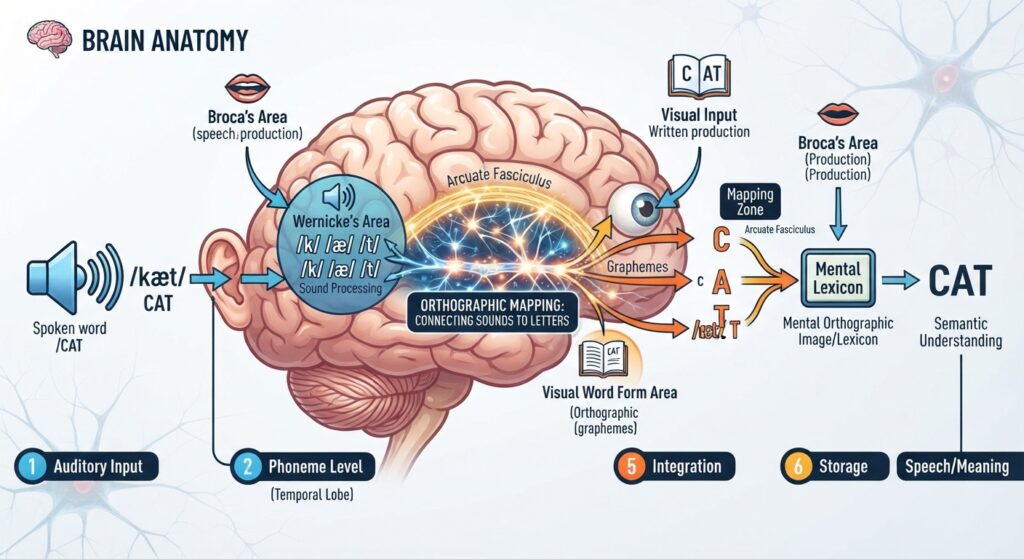
At the heart of the lower-right strand—sight recognition—lies the cognitive process known as orthographic mapping.
Popular misconceptions often treat “sight words” as a list of words that children must memorise by rote visual memorisation (like looking at a picture). However, the Science of Reading proves otherwise. True sight recognition happens when a child uses their phonemic awareness and letter-sound knowledge to permanently anchor a word into their long-term memory.
Through orthographic mapping, the brain connects the sounds (phonemes) it hears in a spoken word to the letters (graphemes) on the page, linking them effortlessly to the word’s meaning. Once a word is orthographically mapped, it becomes a “sight word”—meaning it can be recognised instantly, usually within milliseconds, without conscious decoding.
How Spike’s Sight Words Supports the Reading Rope
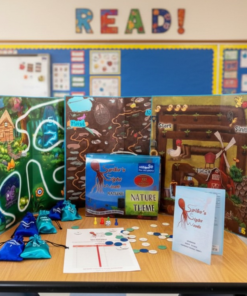
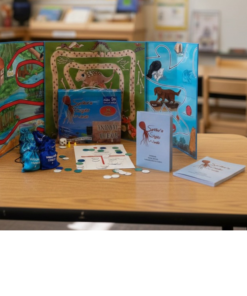
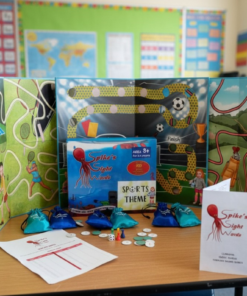
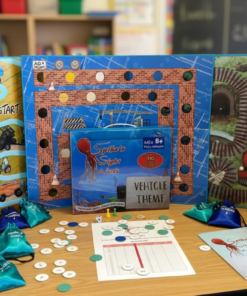
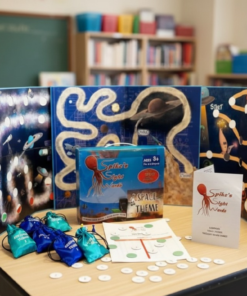
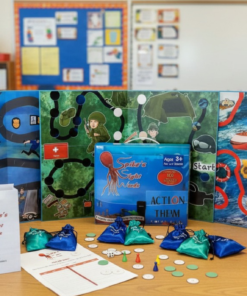
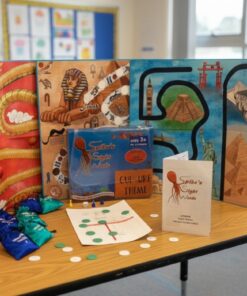
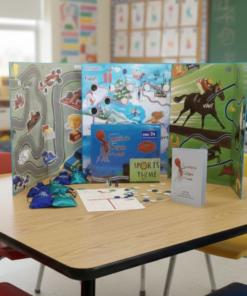
Spike’s Sight Words is specifically designed to support this neurological process, directly strengthening the Word Recognition braid of Scarborough’s Rope through several key mechanisms:
1. Fostering Secure Orthographic Mapping Through Repetition
For orthographic mapping to occur, children need multiple, meaningful exposures to words where they actively connect sounds to spellings. Spike’s Sight Words provides this structured repetition in a low-stakes, high-engagement format. By encountering target words repeatedly during gameplay, children continually reinforce the neural pathways required to map those words permanently into long-term memory.
2. Moving from Effortful Decoding to Automatic Sight Recognition
The lower strands of the rope must tighten and merge over time. When children struggle to identify high-frequency words, their working memory is entirely consumed by the mechanics of decoding. Spike’s Sight Words fast-tracks words from labored sounding-out into immediate, automatic sight recognition. This transition ensures that the “sight recognition” strand grows robust and secure.
3. Freeing Cognitive Load for Language Comprehension
When word recognition requires conscious effort, the reader has little mental capacity left for the top strands of the rope—such as vocabulary and comprehension. By making sight word retrieval swift and effortless, Spike’s Sight Words acts as an efficiency booster for the entire reading system. Secure lower strands tightly intertwine, allowing the reader to seamlessly access and focus on comprehension above.
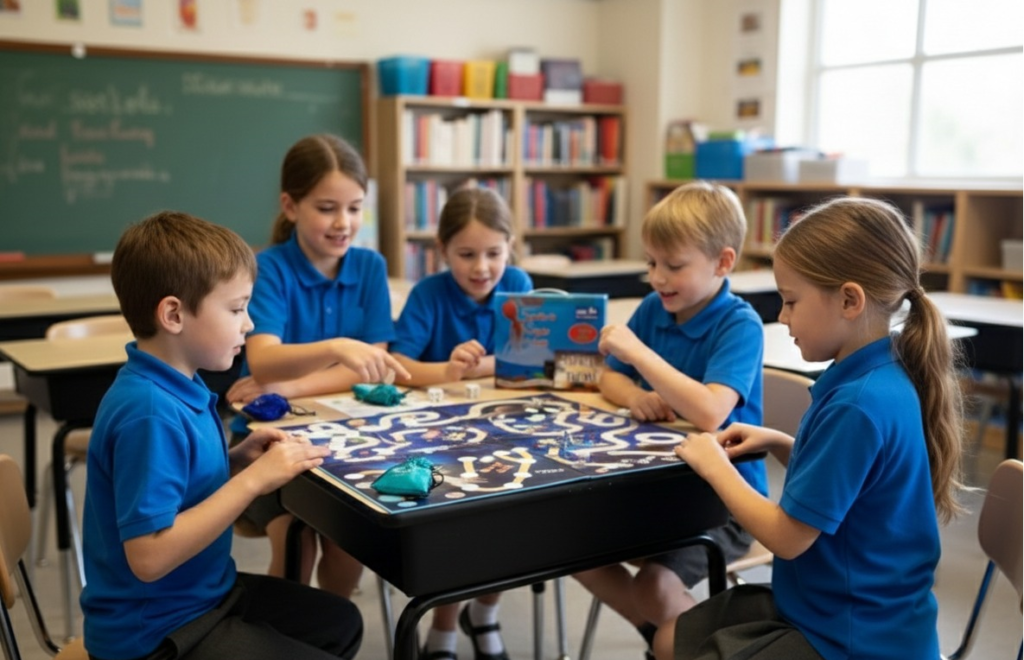
4. Enhancing Retention Through Tactile, Screen-Free Play
The Science of Reading highlights the importance of explicit instruction, but sustained engagement dictates how well children practice. Traditional flashcards can cause cognitive fatigue, but board games introduce social interaction, tactile manipulation, and joyful play. When children actively look forward to playing, practice happens more frequently and retention skyrockets, building a stronger, more resilient literacy foundation.
Conclusion
Scarborough’s Reading Rope reminds us that reading is a complex craft built one strand at a time. While comprehension gives reading its purpose, automatic word recognition—powered by orthographic mapping—gives it momentum. Educational tools like Spike’s Sight Words prove that foundational skill-building doesn’t have to feel like a chore; by weaving fun, structured practice into the learning process, we can help children pull all the strands together toward fluent, confident reading.