FAQ
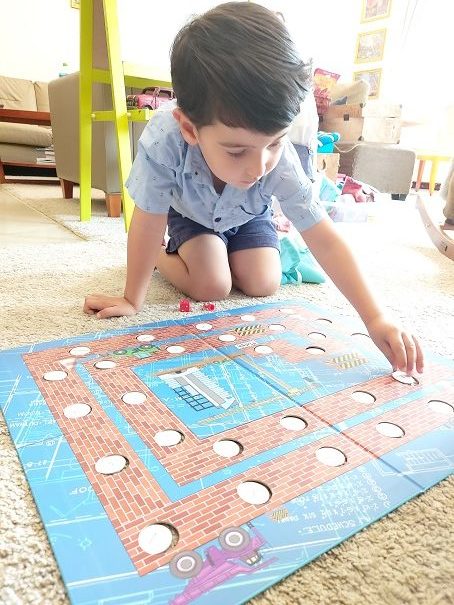
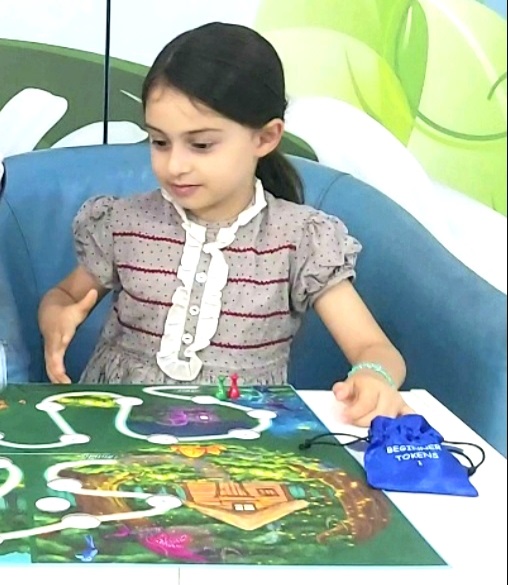
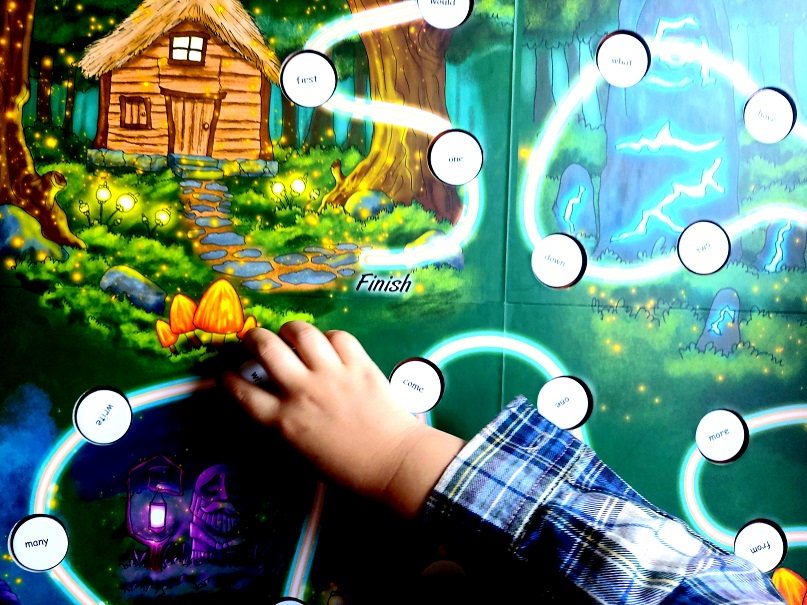
Our educational board games are extremely engaging, fun, visual and enjoyable. Engaging a child into wanting to learn can often be half the battle. Our educational board games are fun and exciting for a child to learn on. Our tokens are repeated twice meaning there is a lot of repetition and chance to practise each word.
- Focused Repetition: Games use themed boards (space, dinosaurs, etc.) and repeated word tokens, providing enjoyable, high-volume practice that solidifies the visual and phonetic links needed for mapping words into long-term memory.
- Reduced Cognitive Load: By removing the stress of traditional drills, the games free up mental energy, allowing the brain to focus on connecting sounds to letters, crucial for struggling readers or those with dyslexia.
- Engagement & Intrinsic Motivation: Fun, engaging gameplay keeps children focused for longer, creating the sustained attention necessary for the brain to form strong orthographic “maps”.
- Automaticity Training: The fast-paced nature of the games trains quick word retrieval, pushing towards automaticity—the hallmark of a fully mapped word that can be read instantly.
- Visual & Multisensory Learning: The combination of visual boards, word tokens, and gameplay provides a rich, multisensory experience that strengthens the mapping process, especially for neurodiverse learners.
Spike’s Sight Words are designed to be used AFTER foundational phonics and orthographic mapping skills are developing, acting as a practise tool to facilitate the brain’s process of turning tricky high-frequency words (like “the,” “said”) into automatic, instant-recall sight words, bridging phonics knowledge with visual memory. They ARE NOT about memorising word shapes but reinforcing the sound-letter connections for irregular parts (heart /tricky words) or easily decodable words through repeated, engaging practise, which is crucial for fluency.
- Phonics First: Children first learn basic letter sounds (phonemes) and how to blend them to sound out words (decoding).
- Orthographic Mapping (The Mental Process): This is the brain’s magic trick where a child connects the sounds (phonemes) they know with the letters (graphemes) in a word and its meaning, storing it for instant recall.
- Spike’s Sight Words (The Practise Tool): These games provide the necessary repetition and focus, especially for words with irregular spellings (like “said,” “was”) or very common words, to solidify these connections.
- Heart / Tricky / Common Exception Words: Words with a tricky part (e.g., ‘ai’ in “said”) get focused attention.
- High-Frequency Words: Words that are fully decodable but appear so often they become instantly recognised.
Absolutely! Our educational board games are PERFECT for children who have dyslexia, autism, ADHD as well as children who are reluctant readers. The board games are in a dyslexia friendly font, the tokens are on a plain white background, the boards are visual and colourful and each board only takes about 5 minutes to play making them ideal for those with short attention spans.
Spike’s Sight Words are popular with reluctant readers and children with SEN but other children can also practise with them. You may as a parent want to help your child learn to read early on or simply help them practise common exception and high-frequency words in this way. They are also ideal for children who are learning English as a second language. We even know of some illiterate adults who also practising these words with them!
Just as a reminder, BEFORE your child starts practising on our board games, they must know how to DECODE words using phonemes and graphemes.
Our board games can be played individually with a teacher / parent or can have up to 4 players playing the one board. There are 3 boards in a pack so more players could theoretically play also if you had extra counters and a dice.
You start practicing High-Frequency Words (HFWs) and Common Exception Words (CEWs) in Reception/Nursery (ages 4-5) as part of early phonics, with Year 1 and 2 introducing more complex CEWs that don’t follow rules like “the,” “said,” “friend,” and “people,” building up to harder ones like “answer,” “certain,” and “environment” through Year 2.
There are 2 options you can go for. Themed Packs and Individual Boards. Simple go to the dropdown menu at the top menu bar and select which option you’d like. Take your time to browse our selection of games because it is essential to choose 3 board games or a theme what will engage your child.
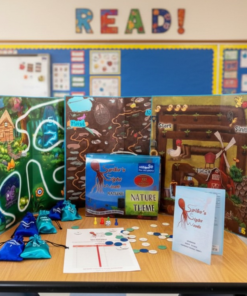
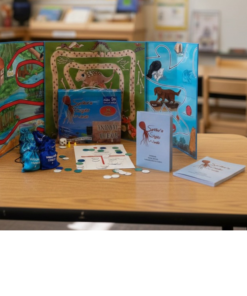
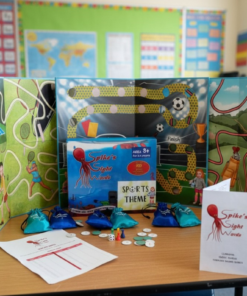
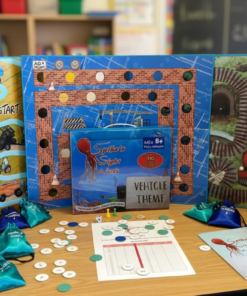
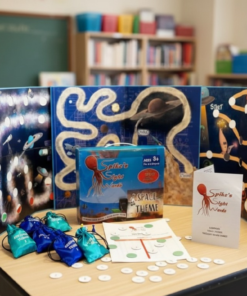
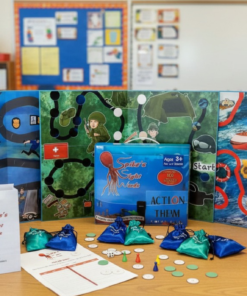
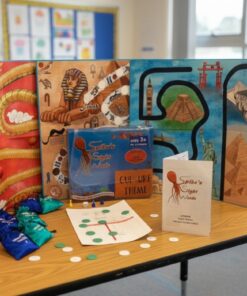
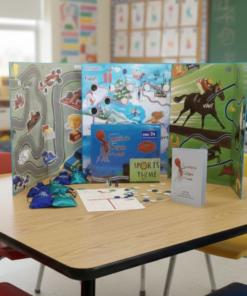
There are 3 board games in every pack. This is the same whether you purchase the Themed Packs or choose and purchase the Individual Boards.
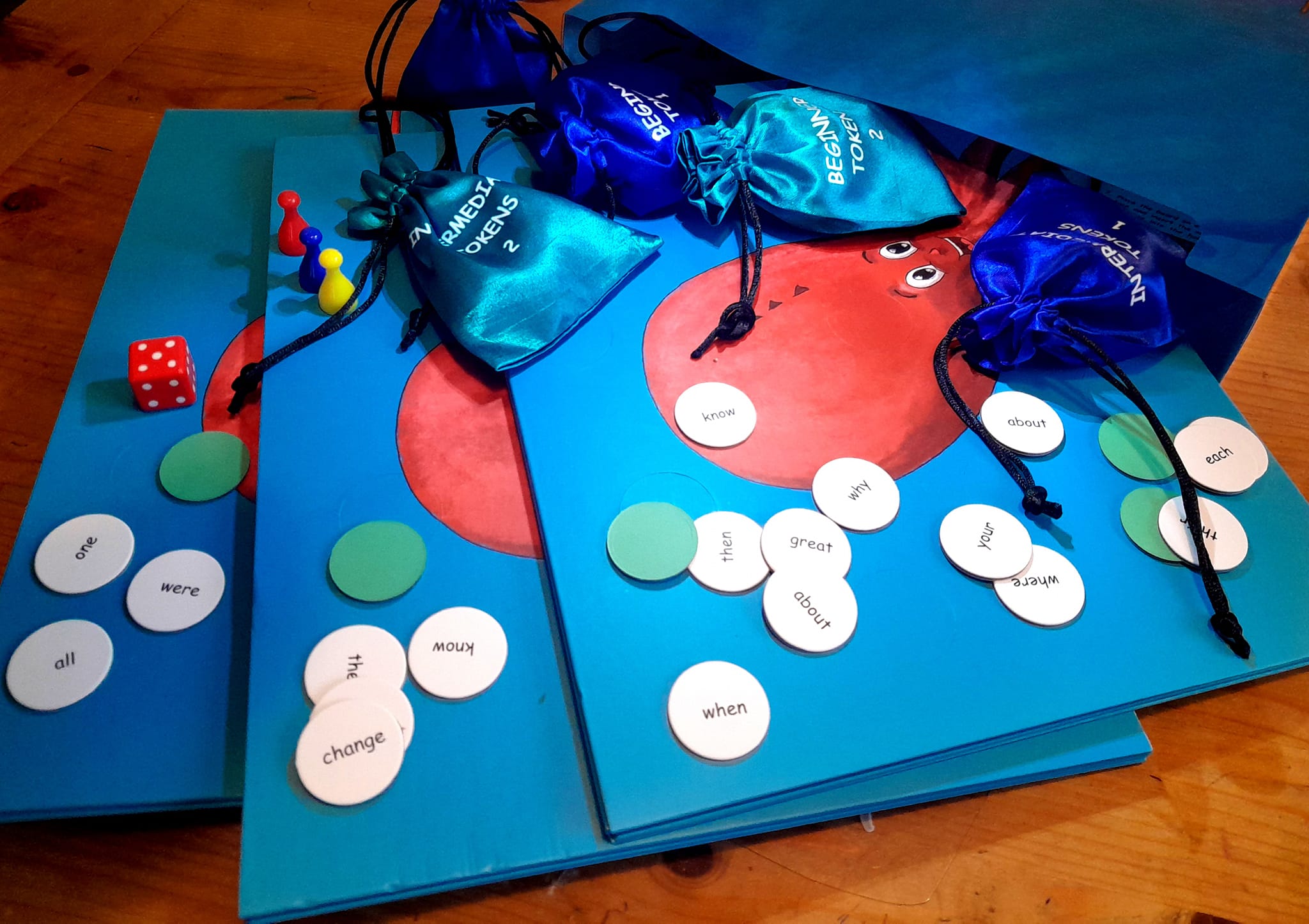
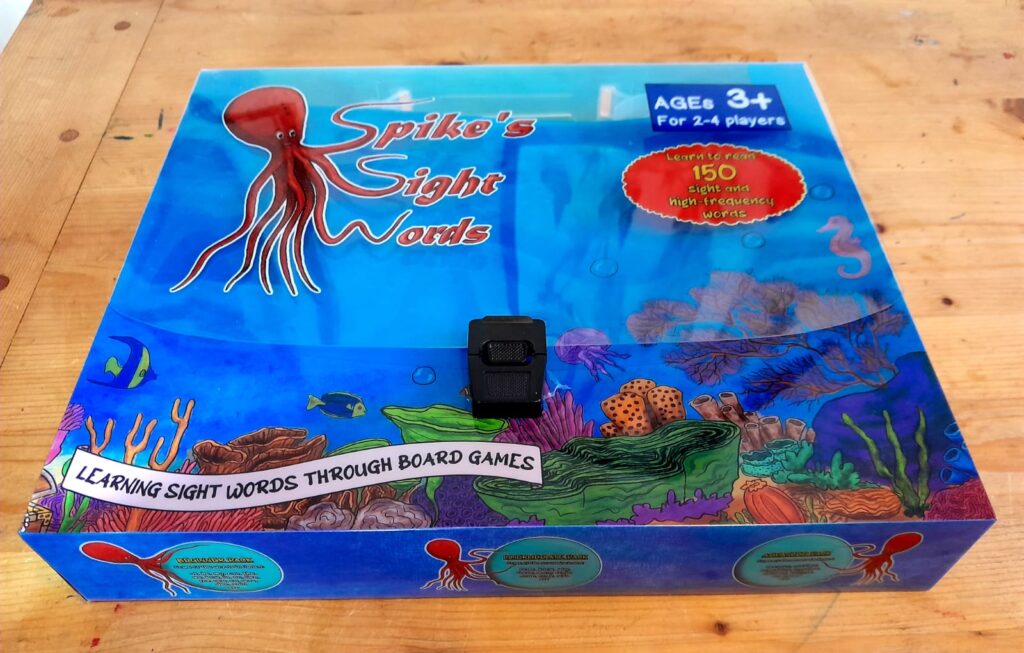
Spike’s Sight Words Pack
The 3 board games comes with an eye-catching Spike’s Sight Words Plastic Wallet Pack that the games get stored in.
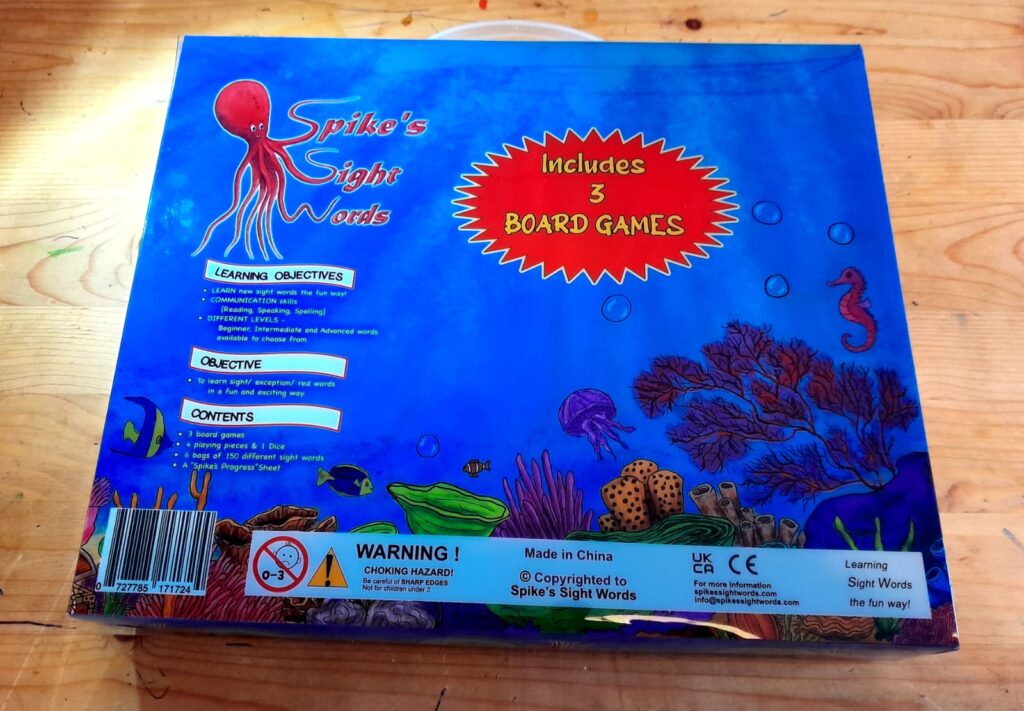
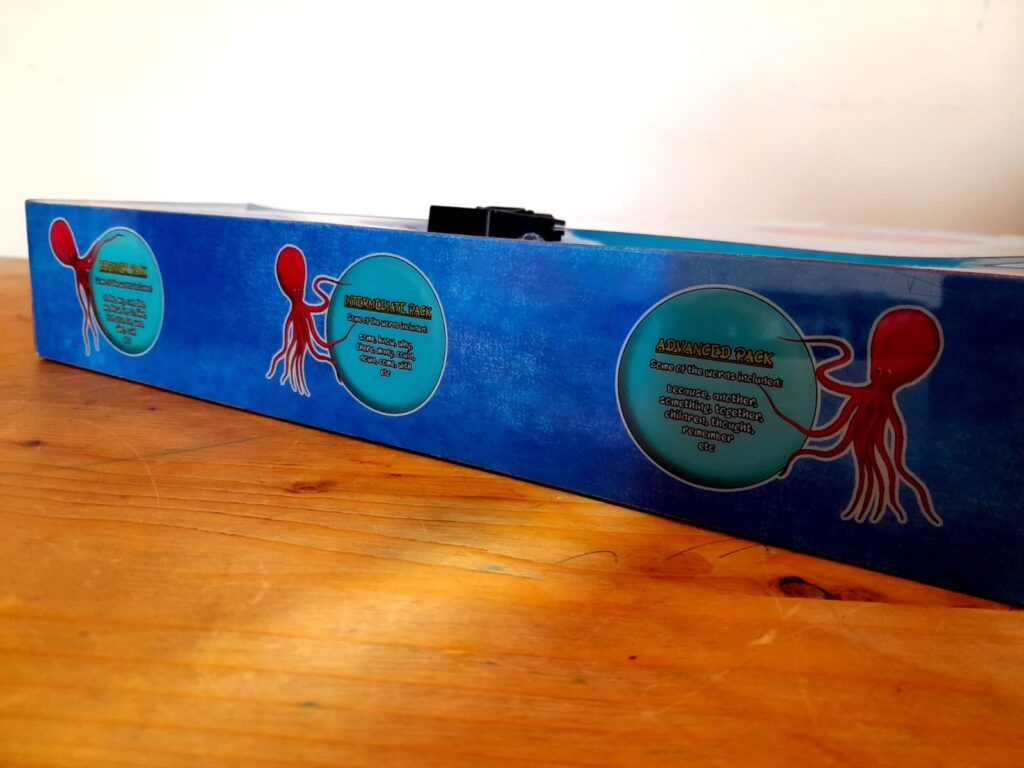
There are also 6 drawstring bags which have been divided up into Beginner, Intermediate and Advanced Words. You obviously use the words according to your child’s level.
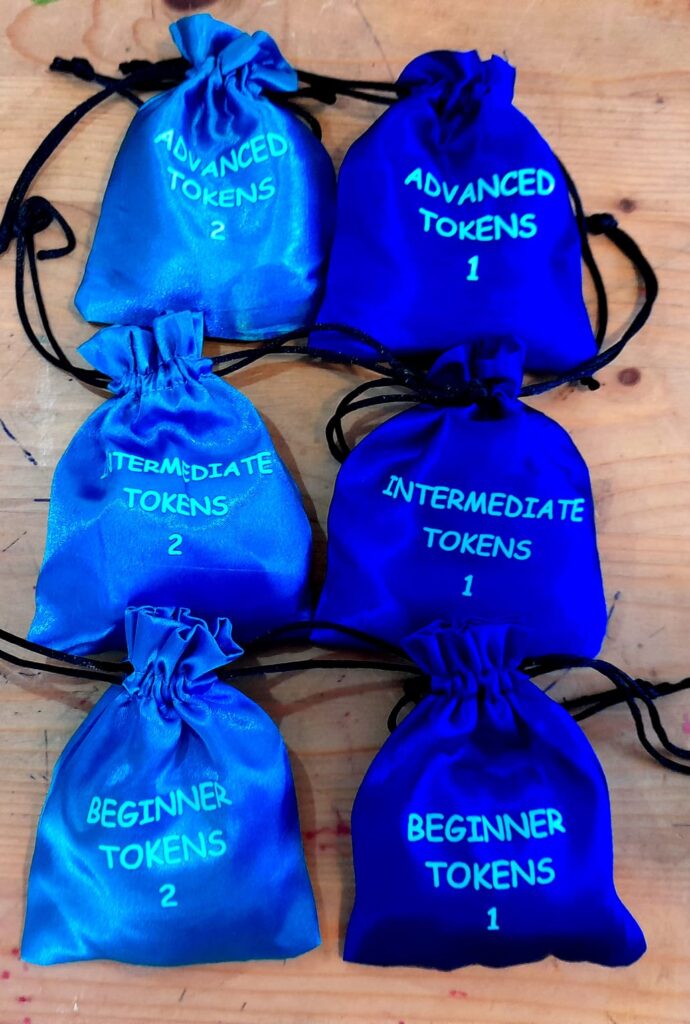
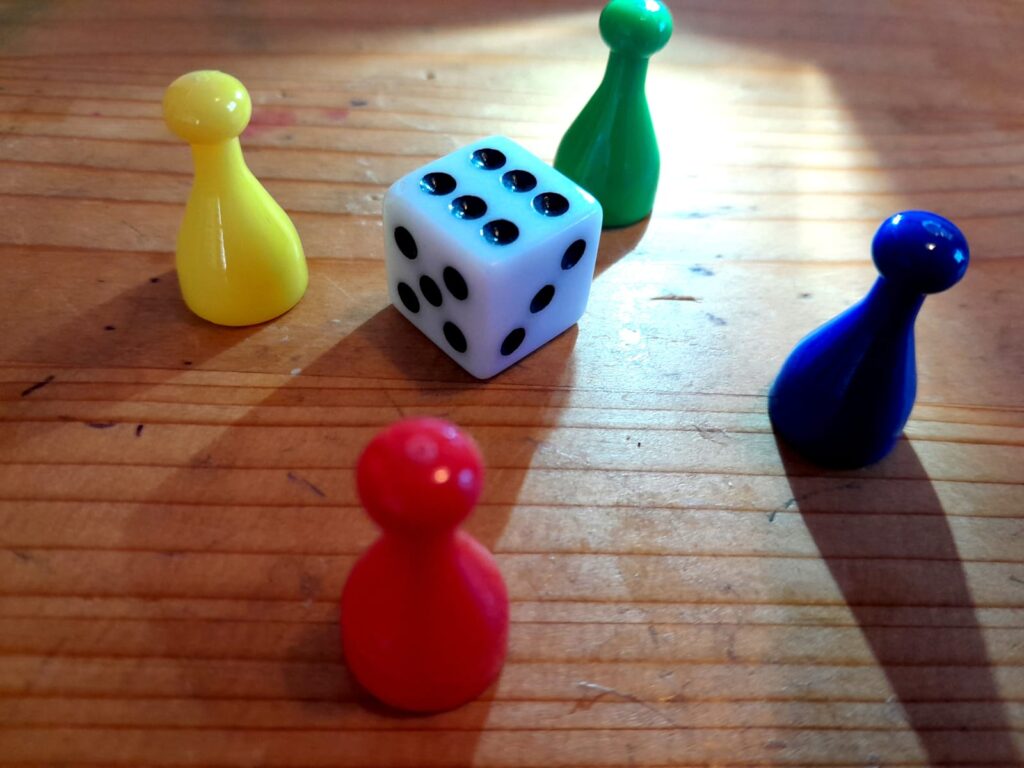
There is also a dice and 4 playing pieces. Although it is perfectly fine to play the board games using the playing pieces we have provided, we strongly recommend using real toy cars, chess pieces or any other objects you may have lying around to help make the games even more exciting and engaging!
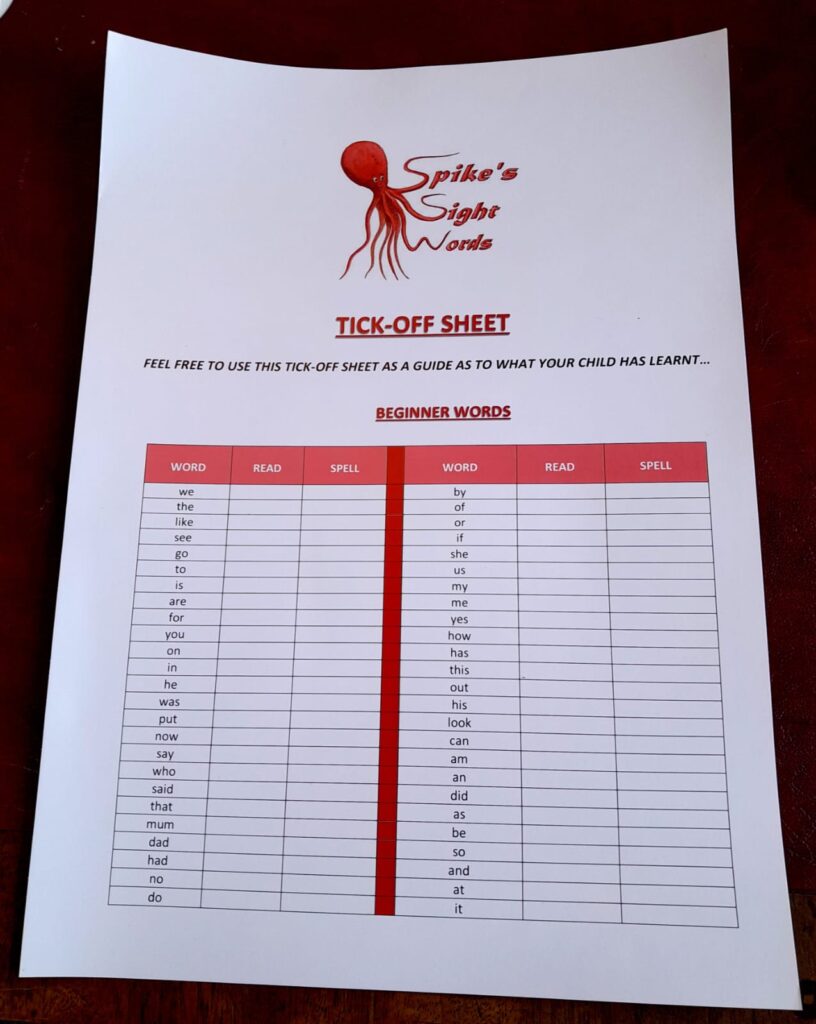
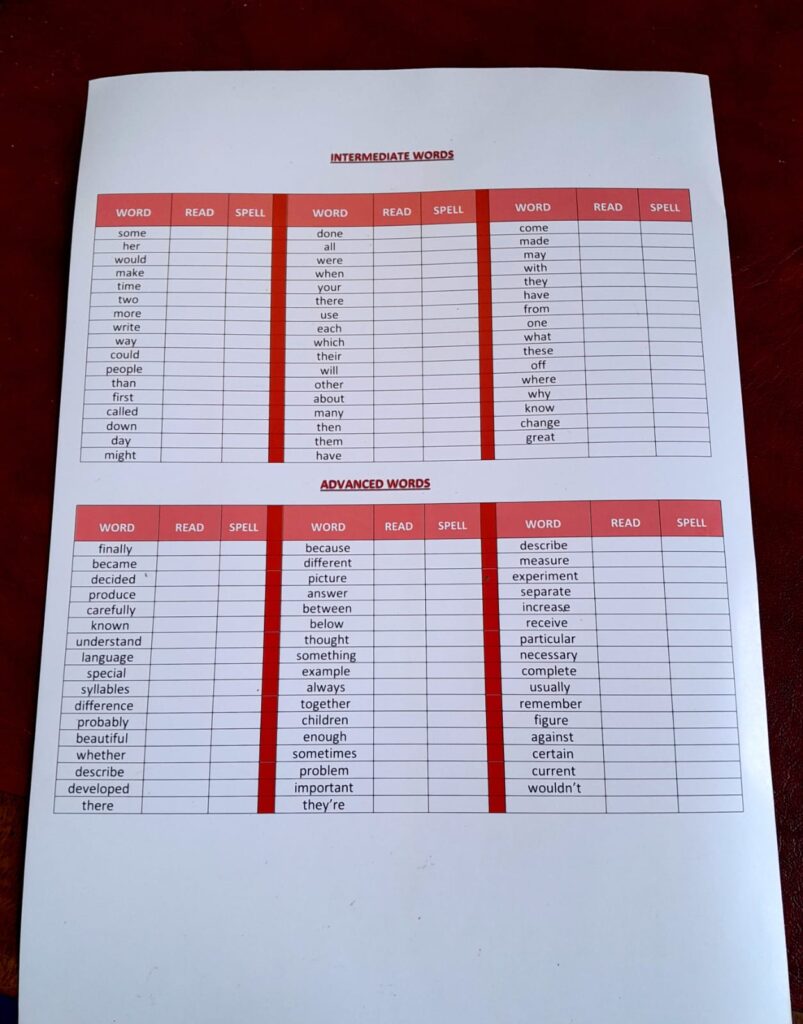
They also come with a Spike’s Sight Words tick off sheet so you can keep an eye on your child’s progress.
Of course you can! Though we are confident you shall never have to for our games are of high-quality and are exactly how they are described!
If however, you still find you would like to return your Spike’s Sight Word Pack, then first contact us on the form at the bottom of this page and we will talk you through the process.