Moving Beyond Rote Memorisation:
How Brain Science and Play Drive Orthographic Mapping
For generations, the traditional approach to teaching high-frequency or “sight words” relied heavily on rote memorisation. Children were handed flashcards, told to take a hard look at a word, and expected to store it in their visual memory through sheer repetition. Yet, cognitive science has revealed that our brains do not actually store written words as holistic visual pictures—like a snapshot or a logogram.
Instead, skilled reading relies on a sophisticated neurological process known as orthographic mapping. Understanding how this mechanism works—and how tactile, screen-free play can accelerate it—transforms how educators approach literacy instruction.
The Science of Reading: Decoding the Brain’s Wiring
The Science of Reading—a vast body of multidisciplinary research spanning cognitive psychology, neuroscience, and linguistics—has fundamentally reshaped our understanding of literacy. Rather than viewing reading as a natural process that simply unfolds with exposure, science shows that human brains are hardwired for spoken language, but not for written text. Learning to read requires the brain to forge entirely new neural pathways.
Two core theoretical models anchor this scientific framework:
-
The Simple View of Reading (Gough & Tunmer, 1986): This foundational formula demonstrates that Reading Comprehension ($RC$) is the product of Decoding ($D$) and Language Comprehension ($LC$) ($RC = D times LC$). Because it is a multiplication equation rather than an addition problem, a breakdown in decoding results in a total collapse of reading comprehension, regardless of how strong a child’s oral language skills might be.
-
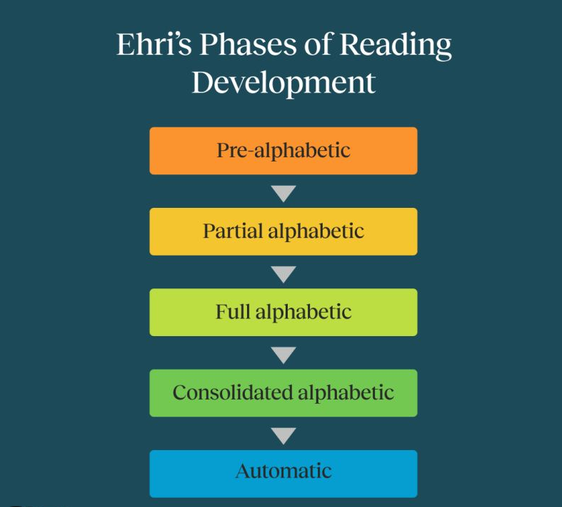
Linnea Ehri’s Phases of Word Recognition: Ehri’s research tracks how children progress from pre-alphabetic guessing to full and consolidated alphabetic reading. It proves that fluent reading is achieved through orthographic mapping—the mental process where readers bind the sounds (phonemes) of a spoken word to the letters (graphemes) of a written word, cementing it permanently into their long-term memory.
The Myth of the “Visual Sight Word”
When children encounter irregular or high-frequency words, educators are often tempted to treat them as exceptions that must be memorised by sight alone. However, cognitive scientist David Share’s Self-Teaching Hypothesis demonstrates that children actually teach themselves new words independently through phonological decoding and orthographic mapping.
When a child relies purely on rote visual memorisation, they are placing an immense burden on their working memory. The human brain can only hold a limited amount of visual information at once. Flashcard drill methods treat words like abstract symbols, bypassing the linguistic centres of the brain.
True orthographic mapping, by contrast, connects the auditory processor (pronouncing the sounds) with the visual processor (recognising the letters) via neurological highways like the arcuate fasciculus. Once a word is mapped, recognising it becomes instantaneous and effortless.
Bridging Brain Science and Play: The Power of Tactile Learning
If orthographic mapping is the biological key to fluent reading, how do we spark it in young learners—especially those who struggle with traditional desk-bound drills?
The answer lies in integrating tactile, multi-sensory experiences into literacy instruction. Digital apps and screen-based learning tools attempt to make practice engaging, but they often lack the physical grounding required for deep cognitive engagement. In contrast, physical board games and hands-on manipulation create a rich sensory environment that reinforces sound-letter correspondence.
When children physically handle game components, manipulate letter tiles, and engage in social, gamified peer interaction:
-
Attention and Motivation Peak: Dopamine released during play enhances memory consolidation and neural plasticity.
-
Multi-Sensory Integration is Activated: Combining tactile manipulation with verbal phoneme blending fires up multiple regions of the brain simultaneously.
-
Anxiety is Minimised: Play removes the high-stakes pressure of traditional testing, allowing children to experiment with spelling-sound correspondences safely.
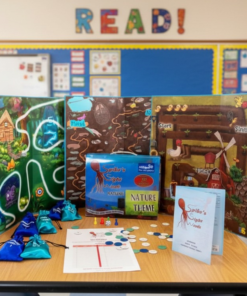
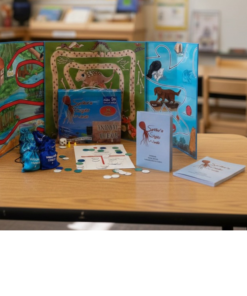
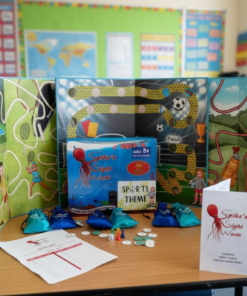
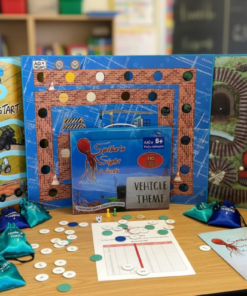
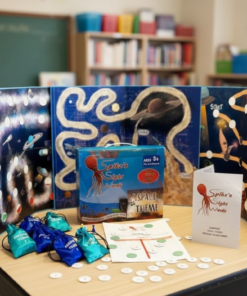
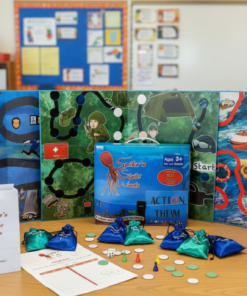
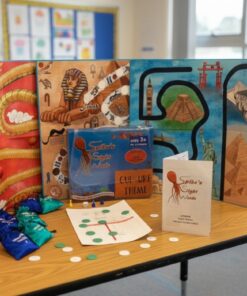
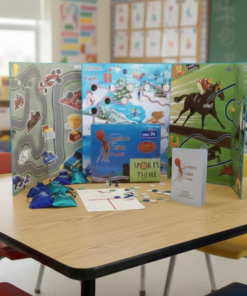
Educational board games like Spike’s Sight Words offer a practical, engaging way to bridge this gap, actively reinforcing the specific competencies that make skilled reading possible. By anchoring high-frequency words in tactile gameplay, these resources support the lower strands of Scarborough’s Reading Rope—tightening decoding and automatic word recognition into a unified, unbreakable cord.
Moving Forward
Shifting away from rote memorisation is not about abandoning high-frequency words; it is about changing how we teach them. By aligning our teaching methods with the Science of Reading and leveraging the power of purposeful, screen-free play, we can move children past the exhausting trap of memorisation. Instead, we can empower them with the neurological tools they need for lifelong literacy success.
have a look at our award-winning educational board games